ATLASCSU Advanced Technology Lasers for Applications and Science facility
ATLAS
A Premier Multi-Petawatt
Laser Facility
A global hub for high-power laser research and fusion energy innovation
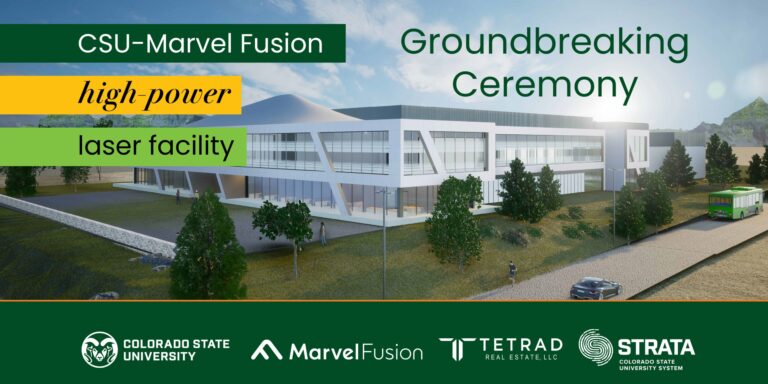
The Advanced Technology Lasers for Applications and Science (ATLAS) facility at Colorado State University will help solve one of the most urgent technological challenges of our time: creating abundant, affordable, and clean energy through laser-driven nuclear fusion.
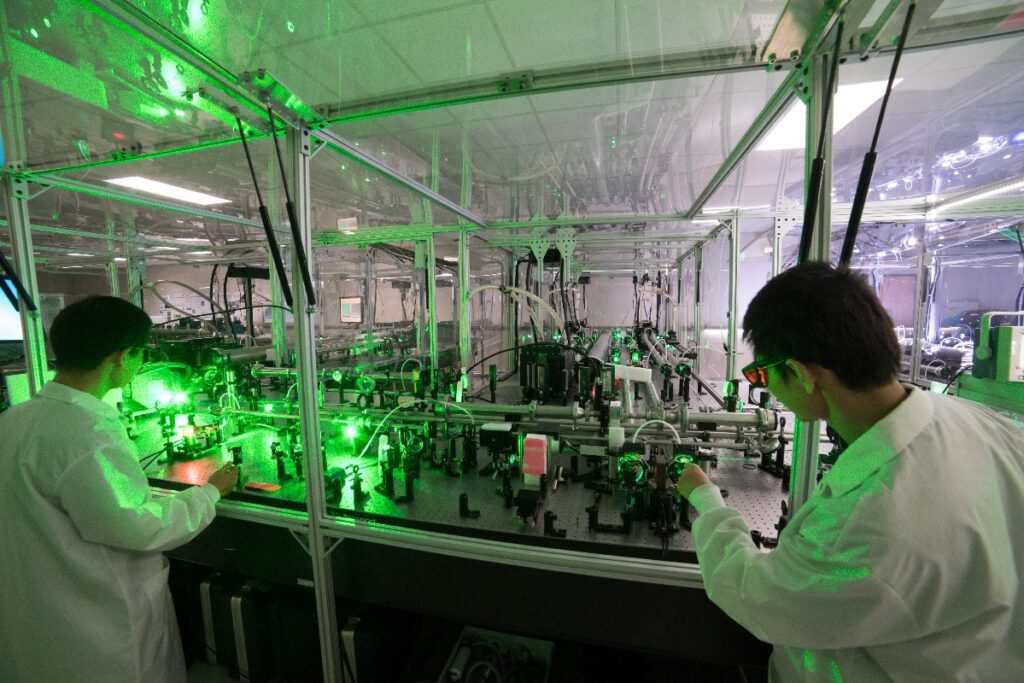
Opening in 2027, ATLAS will feature three of the most advanced, high-repetition, multi-petawatt lasers in the world—enabling experiments at extreme energy densities—while modular experimental stations allow for rapid adaptation to different research and application needs.
100x faster
Hundreds of shots per day vs. other facility’s 10
$150M
State-of-the-art infrastructure
40+ years
CSU laser science leadership
3 lasers
Only facility with three synchronized multi-petawatt, high-rep rate lasers
Accelerate Scientific Discovery
Access to unique capabilities
Collaborative environment
World-class expertise
Solve Complex Challenges
Professional services
Rapid R&D cycles
Proven results
Invest in the Future
Transformative technology
Clean energy solutions
Economic impact
Learn about our research
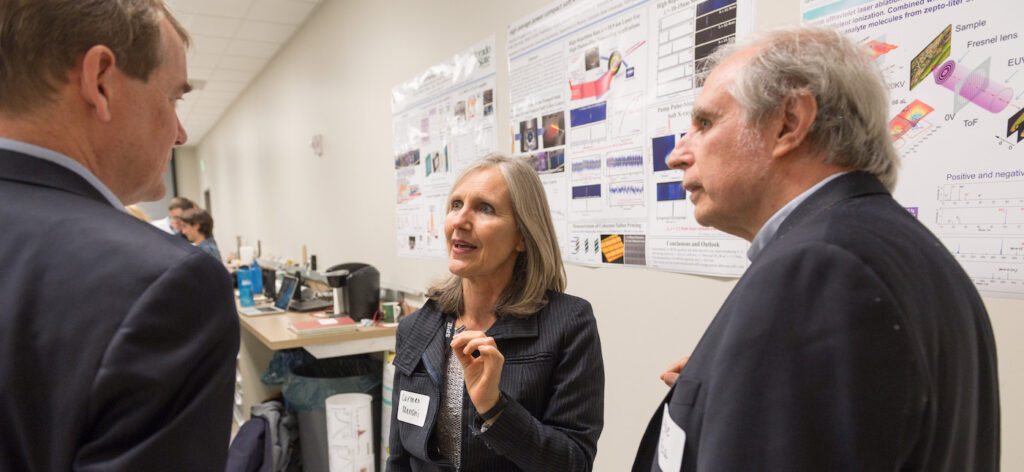
CSU’s leadership in this area is driven largely by University Distinguished Professors Jorge Rocca and Carmen Menoni in the Department of Electrical and Computer Engineering. Rocca, who is a member of the National Academy of Engineering, also holds a position in the Department of Physics, and Menoni in the Department of Chemistry.